As we move through 2026, global tech has solidified one undeniable truth: India remains the premier destination for digital innovation. For years, founders and enterprises have flocked to the Indian subcontinent to build their software, but the “India Advantage” has evolved. It is no longer about the lowest price tag; it is about the access to a huge talent pool that is now taking the lead in artificial intelligence, blockchain, and high-end UX design.
India is a sweet spot in this year, which may be an ideal time to build a mobile app, as technical skills of the highest quality are found in the country at reasonable prices. Nevertheless, the question of the day is, “How much will it really cost at a mobile app development company?” The price of a mere app may be $10,000, but a complex enterprise solution can easily go over $100,000. To make you budget well, we have subdivided the costs, trends, and variables that characterize the development market over 2026.
Table of Contents
Decoding the Primary Price Drivers
Platform Choice: Native vs. Cross-Platform
The first decision is where your app will live. Building “native” apps (separate codebases for iOS and Android) provides the best performance but essentially doubles the work and thus the cost. Nevertheless, cross-platform development with Flutter or React Native has become the new standard in the industry in 2026 in the majority of business applications. It enables one codebase to work on both platforms. Partnering with an experienced flutter app development company allows you to launch faster, which would often cost you 30% to 40% less to develop in the first place without compromising the feel of a quality app.
Complexity of the App Architecture
We generally categorize apps into three tiers. A simple app (an MVP with basic login and profiles) is the most affordable. A medium-complexity app involves external API integrations, social media syncing, and payment gateways. Finally, complex apps think marketplaces like Amazon or Uber require real-time tracking, sophisticated databases, and multi-user roles. As you move up these tiers, the hours required for backend architecture scale exponentially. For businesses undecided on the scale of their build, evaluating progressive web apps vs. native apps is a crucial step during the discovery phase to determine if a web-based solution can meet user needs at a fraction of the native development cost.
The “AI Factor” in 2026
It is impossible to discuss tech in 2026 without referring to AI. Current apps have become increasingly intelligent in some form, be it a generative AI customer support chatbot or machine learning-powered personalized recommendations. Integrating these “smart” features requires specialized data scientists, an AI agent development company, and API costs (like OpenAI or Anthropic), which adds a premium of 20% to 50% to a standard development budget compared to three years ago.
Who You Hire Matters as Much as What You Build
Freelancers vs. Boutique Agencies vs. Enterprise Firms
The cheapest are freelancers, who usually charge between $15 and $25 per hour, although they pose the greatest risk of project management and long-term support. Most startups fit in the Goldilocks zone of boutique agencies between $30 and $60 per hour, offering a complete team of designers, developers, and managers at the right price and accountability. Enterprise companies ($80 and above an hour) have the best security and volume but are usually used by Fortune 500 companies with huge budgets.
Geographic Variability Within India
Location matters. If you hire a team in Tier-1 hubs like Bangalore (the Silicon Valley of India), Gurgaon, or Hyderabad, you will pay a premium for their proximity to global tech giants and high-end infrastructure. However, there is a rising trend of “Tier-2” tech excellence in cities like Ahmedabad, Jaipur, and Kochi. These cities offer top-tier talent at a 15–20% lower overhead, making them excellent choices for cost-conscious founders who don’t want to compromise on quality.
The Hidden Roles in a 2026 Team
Modern development is not only about a guy who codes. A multidisciplinary team will have to be included in your budget to win in the current competitive App Store. It will consist of a UI/UX expert to make the app easy to use, a DevOps expert to deploy the app to the cloud, and QA automation experts who will write code to test your code. These features are essential to any app that is going to be used in a professional market in 2026.
From Discovery to Deployment: Where the Money Goes
Discovery and UI/UX Design Phase
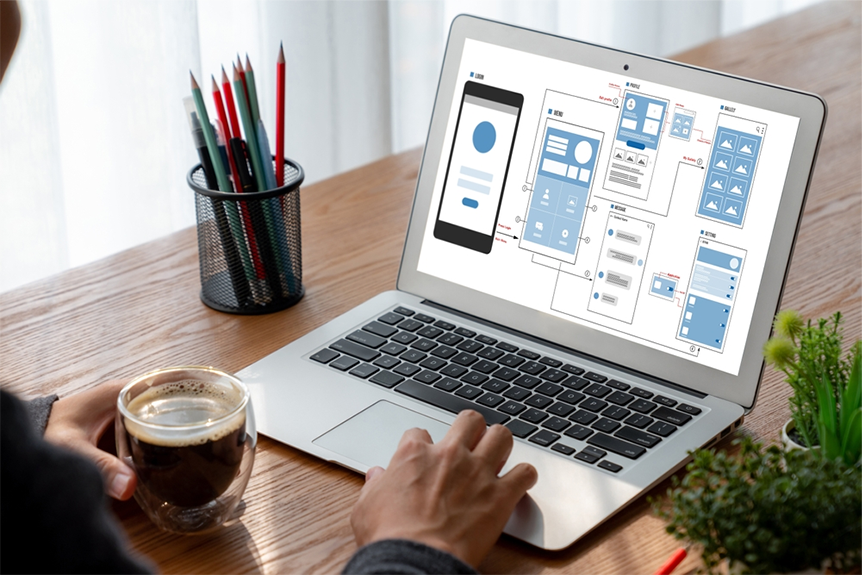
Before a single line of code is written, you must have a blueprint. This phase involves user research, wireframing (the skeleton of the app), and high-fidelity prototyping (the “look and feel”). In India, this phase typically consumes about 10–15% of your total budget. A well-designed prototype isn’t just “pretty”; it saves you money later by identifying logical flaws before they become expensive coding errors.
The Development and Backend Sprint
This is the workhorse of your project and the biggest portion of the cost (approximately 60%). It entails the installation of the servers, the database, and third-party APIs (such as Stripe to collect payments or Twilio to send SMS). Because India has a high density of backend experts, this phase is where you see the most significant cost savings compared to US or European developers, often getting “senior-level” work for “junior-level” prices.
The “Hidden” Costs After the App Store Launch
Annual Maintenance and Technical Support
Software is like a car; it needs regular oil changes. OS updates (like iOS 19 or Android 16) can break features in an older app. You can even spend 15-20% of your initial development cost per year just to keep the app running smoothly.
Cloud Hosting and Third-Party API Fees
Your application should have a home, often in AWS, Google Cloud, or Microsoft Azure. Hosting can be as cheap as $50 to as expensive as $2,000 or more per month depending on your user base. Also, in case your application employs such services as Google Maps to navigate or ChatGPT to have an artificial intelligence assistant, you need to include these monthly recurrent expenses in your long-term operating budget.
Marketing and App Store Optimization (ASO)
You can build the greatest app in the world, but if no one finds it, it won’t matter. The App Store and Play Store are crowded. A budget for App Store Optimization (ASO), which involves keyword research, professional screenshots, and video previews, is essential. Furthermore, planning your push notifications strategies to increase app retention ensures that once you’ve paid to acquire a user, they actually stay active within your ecosystem. A marketing budget that is 50% of the cost of development is recommended by many successful founders in order to get the app to actually gain traction.
Conclusion
In 2026, India is still the most plausible place to develop a mobile app, as it has a rare combination of scale and talent. and value.
By selecting the appropriate partner in India and considering the entire lifecycle of the app from the initial wireframe to the yearly maintenance, you are establishing your digital business to be successful in the long term. Are you willing to make your app idea come true?